Friday, 19 December 2014

Keep dreaming and working

If you have a dream protect it from all the negative people in your life. They are so negative because their insecurities and broken dreams are giving them nightmares when they look at you and when they look in the mirror. You failed a couple of times, SO WHAT! You made a couple of mistakes, SO WHAT! The only thing that matters is that you keep trying and pushing to make your dream a reality.
Nobody said or made promises that it is going to be easy, but surely it will be worth it. If they say negative things towards your dreams and aspirations, please tell them they have no right to comment on yours if theirs are in pieces or stagnant.
I came to realise that people who are working on their dreams are generally positive and supportive towards others’ dreams. They help others in achieving theirs. On the contrary, I came to realise that negative people (in most cases it are people very close to you) either gave up theirs or they fear yours might end up like theirs.
This is one of the biggest mistakes of most friends, family and parents. You share an idea or dream with them and the first words they utter are: ‘it will not work.’ This is the last thing you want to hear especially since you already know the risks; and when these words are uttered it shatters the last bit of confidence you had into a million pieces. What parents, family, guardians and spouses do not realise is that they are systematically sabotaging the future of their children, family members and spouses. A little bit of positivity is all the person needs to get him or her going.
I remember back in 2006 when I had to make a decision whether I must register the next year or not, I needed only two people’s positive reactions to get me into action. There were those who were negative but I needed the confirmation of two people. The first was my Grandmother and the second was Ant Lenie.
Of the two I expected my Grandmother to be the most critical but when I mentioned it to her, her first and only words on the subject were: my kind gaan studeer (my child go study). It was exactly the same response I got from Ant Lenie, and so I registered in 2007 and since then graduated thrice.
You really do not help anyone by being negative if they came to you with their dreams. You must be flattered because that person trusts you! You have two choices either say nothing or motivate that person. If you decide to motivate and support that person, please make sure they answer these questions to themselves before they start their dreams.
The first is why the person wants to do it? It is important the person answer this question because it will keep the person going when they are experiencing difficulties. The second is how would it add value to his or her life? Not all value is monetary, some are intrinsic. Thus make sure the person knows what he or she will be getting from the dream because that will keep them going. Finally, ask the person whether he or she is willing to take the sacrifices that come with pursuing the dream. Pursuing any dream is not easy and there will come days when you feel like giving up. Make sure the person understand this.

These questions are merely a guide but a good way of encouraging someone to start his or her dream. Remember some people were laughed at when they said they want to go to the moon, build an aeroplane, a telephone, a car, etc. Your best response to negativity must be success. 


Monday, 15 December 2014

Kerfees in Namakwaland

Kerfees in Namakwaland is ‘n wonderlike tyd en al het ons nie baie nie laat dit ons nie afsit om ‘n heerlike tyd te he nie. Die musiek, die mense, die braai vleis en die kinders wat lag is van die beste herinneringe wat ek koester. Soos ‘n mens ouer word verloor jy dinge in die lewe, eers is dit die mense om jou,  later is dit jou drome een vir een en eendag as jy jouk om kry is dit Kersfees. Dit is ‘n moeilike werklikheid wat ons as mens moet aanvaar.
Ek skryf hierdie stuk met die musiek van Allou April in die agtergrond terwyl ek omring is met geboue en die gejaag na wind. Soos die Prediker gese het, is al ons drome en suksesse aan die einde van jou leeftyd ‘n gejaag na wind. Alles waar voor jy so hard gewerk het kom tot niks. Niks.
So, terwyl ek besig is met my gejaag na wind verlang ek na die mense van Namakwaland – my oorlede Ouma en Oupa, my oorlede vriend Neels (Oor wie ek nie gehuil kan kry nie. Die huil sit hier binne in my maar dit is moeilik om uit te kom. As dit net wil uitkom sal ek beter voel maar nou wil dit nie.), my vriende wat oor die jare my famlie geword het en my familie.
Die beste en die laaste keer wat ons as familie bymekaar gewees het ‘n Kersfees was in 2005. Die jaar wat by die army klaar gemaak het. Dit het spontaan gebeur. Eers het my een Antie laat weet sy kom en toe my een oom (die ander een was by die huis) en op Kersfees het my ander Antie kom kuier. Al hoewel twee van my Ouma en Oupa se kinders nie daar was nie het dit nie saak gemaak nie.
Ek het lang arm musiek op my laptop gehad wat ek op ‘n CD gesit het en wat ons in die DVD klaar gespeel het. Ek het gedans – ons almal het gedans. Ek het die voorreg gehad om saam met my Ouma te dans. Dit was toe sy nog sterk was want die jare daarna het sy al agteruit gegaan tot sy ‘n skaduwee van haarself was. Ons het gemmerbier gedrink en koek geeet. Vleis geeet.
Wat ‘n tyd.
Vandag dink ek daaraan en verlang na my wereld en sy mense. Waar vandaan ek kom is nou wel droog en kaal in die sommer maar die mense is gasvry en te gemoedkommend; wat ‘n eindproduk van swaarkry is. Is net wanneer jy regtig swaar gekry het of rerig swaarkry dat jy so gasvry en mededeelsaam kan wees sonder voorgee. Mense kan nou maar wat se van ons wereld en sy mense maar nie een kan se ons is suinig en vrekkig nie. Ons almal weet hoe om suiker tot more te vra.
Ons mense het ook hulle eie soorte trots, ‘n trots wat jy nie uit hulle sal kry nie. En dit verskil van hoogmoed. ‘n Trots wat hulle ook partykeer in stilte sal laat vergaan net sodat jy nie hulle menslikheid van hulle kan neem nie. Daardie trots is wat hulle nog mens hou al kry hulle hoe swaar. En dit is die trots wat in my en enige ander kind van die Namakwaland is. Jy kan probeer om oor ons te loop en jy kan dit miskien regkry maar my menslikheid sal agterbly al beteken dit my eie ondergaan. Kruip is vir enige mens swaar maar nog swaarder vir iemand van Namakwaland.
Maar genoeg van die trots en die swaarkry en terug na Kersfees in Namakwaland.
Een van die dinge wat my altyd nostalgies maak is die reuk van vuur in die skemer en die langarm musiek wat so eie aan ons mense is. Die tipe musiek wat dit ontmoontlik vir jou maak om stil te sit. Of jy nou kan dans of nie maar dans sal jy – al is dit net voutjies klop. Gee vir Pieter Pillie en Oorlede Ant Grietjie ‘n kitaar en jy het ‘n party wat die son sal laat op kom.
En terwyl Allou se Madiba’s Jive my terug bring na die werklikheid toe, laat die herinneringe van Kersfees in Namakwaland my met ‘n snaakse tevredenheid.
Geseende Kersfees.

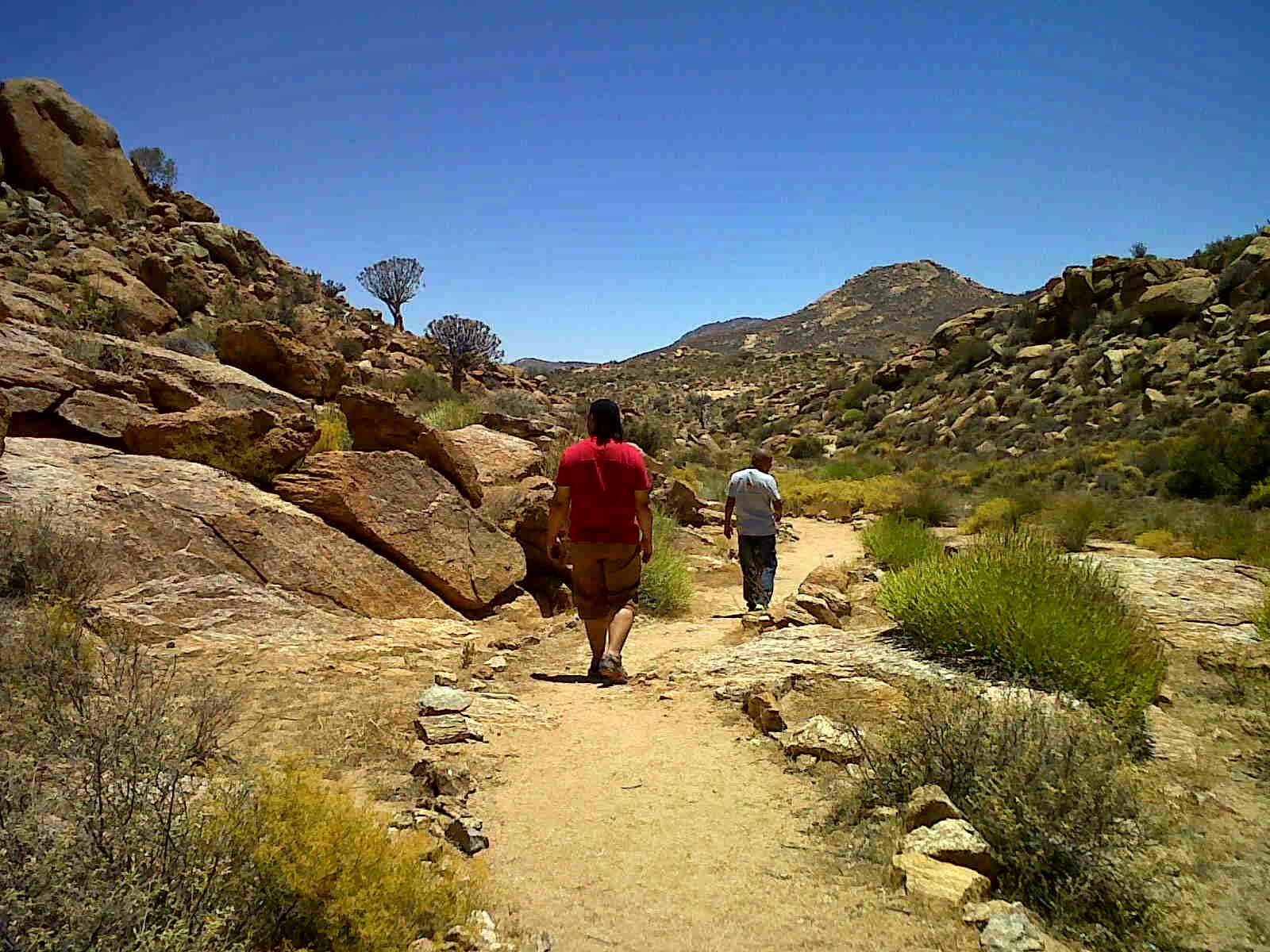
Namaqualand Concordia
Add caption

Toe gewy aan my vriend Cornelius Ovies, vriende en familie.


Monday, 8 December 2014

Enhancing Humanities in Africa

It seems as Humanities across the globe is in a crisis. Several reports contribute this crisis to a decrease in funding, a declining number of students who enrol for Humanities and a declining number of graduates who find a job after they graduated in Humanities (Delany, 2013; Levitz & Belkin, 2013 and Tworek, 2013).

A recent study by the Academy of Science of South Africa echoes some of the global trends. One of the key findings, in their report titled Consensus Study on the Future of the Humanities in South Africa, indicates that humanities is a state of intellectual stagnation and has been in this moribund condition for the past 15 years. A report commissioned by the Department of Higher Education called the Charter for Humanities and Social Sciences had similar findings. The difference between the two was that the Charter was institutionalised as the National Institute for Humanities and Social Sciences and has to address the challenges Humanities in South Africa are facing. Even though these reports are only based on the state of Humanities in South Africa we may infer that this is most likely the case in the rest of Africa.

However, the reality is Humanities in Africa inherited a particular history of privilege and subjection at independence and since then we have been grappling with it, and it seems as we are stuck. These reports opened a debate in South Africa and other parts of Africa as to what is the way forward for Humanities in Africa.

Pillay (05 April 2013, Mail & Guardian) argues that “we should lead the critique of the humanities and social sciences we have inherited by pointing to its limitation.” Leading the critique would mean we are taking responsibility for a ‘new’ Humanities going forward. In addition to this, Premesh Lalu in an article in the Mail & Guardian encourages African scholars to think ahead and out of the deadlock (Lalu, 07 June 2014, Mail and Guardian). I have to agree as I found that the majority of scholarly work in Africa is stuck in the past and disregard the present and the future. There are two things we have to bear in mind in this debate: we cannot change the past and we live in the present. I am not disputing the importance of the past but we have the tendency of disregarding the present and the future in scholarly work.

Like many other disciplines, Humanities also operates in the present. Our reality is that the present is materialistic and technologically driven society. Technological advances shapes a future which is changing so rapidly that even the most progressive technologically driven disciplines find it hard to keep up. This can be either a threat or an opportunity. If we see it as an opportunity a new generation of Humanities students has to be innovative, contemporary and at the fore front of societal change. Thus, we must anticipate changes and approach it progressively. However, this can only be possible if we are clear of the future we want for Humanities in Africa.

So what is our point of departure?


Mahmood Mamdani of the Makerere Institute for Social Research (MISR) recently asked the question how do we think the world from Africa? In the famous Hollywood movie ‘Blood Diamond’ the mentor of the protagonist said to him TIA which means ‘this is Africa.’ He referred to the main stream Western view of Africa which is seen as violent, corrupt and exotic. Since then a new movement amongst young African musicians developed which is called TINA which stands for ‘this is new Africa’. This movement decided to reclaim African music and expose it to world. They are not standing back for any of their Western counterparts and have some of the most popular videos on Youtube. It is time for Humanities in Africa to reclaim their place in world but we can only do this if we know what our point of departure is and only then we are able to think the world from Africa.

Sunday, 30 November 2014

Race and the ‘politics of beauty’ – A male’s view

I recently paged through the latest edition of Men’s Health SA and it struck me how the majority of cover models tend to be white.

I decided to count all the black men in the December 2014 edition and I found 27 different black men of which 17 are models; the other ten appear in DSTV and Telkom adverts. I then counted all the white models and I found 47 white men. This total would have been more if I included the DSTV and Telkom adverts.

More disturbing was the under representation of black women in this edition. I counted 3 black women compared to the 24 white women. More interesting was how these women were portrayed. Firstly, the 3 black women shared the spotlight other white women. Secondly, white women were portrayed as sexually desirable which ranged from the girl next door to models who suggestive press against men in jeans and libido enhancing adverts.

I did not stop there, I also looked at the cartoons in the Magazine and I found that it is evidently racialized and there is a clear underrepresentation of black people.

So what does this say?

Firstly, this edition of Men’s Health is targeting white men and this is evident from the underrepresentation of black people.

Secondly, the underrepresentation of black people in Men’s Health says something about how Men’s Health sees and portrays beauty in the cosmetic industry. This is obvious by how they portrayed intimate relationships (relationships between men and women). Their portrayal reinforces the apartheid objective[1] which was that white people must date and marry white people and black people must date and marry black people. Through this they do not encourage interracial relationships. The evidence is their lack of portraying black women as sexually attractive beings. They clearly work from the assumption that white men would not be interested in black women. Thus, they do not encourage interracial relationships.

I see this as a ‘politics of beauty.’ For me the ‘politics of beauty’ is where the dominant social force reinforces or enforces their notion of beauty through popular media such the television, radio, print media and social media.

Fanon speak about this phenomenon in length in Black Skin, White Masks and it worth mention here briefly. Black women in particular are guilty for reinforcing the mainstream portrayal of beauty. Fanon speaks about the whitening process black women undergo to become desirable for white men and to match the standards of what white women consider as beauty. Fanon point out how black women will go through extreme measures such as skin bleaching and hair straightening to become more like white women.

This is still the case today. In South Africa there is currently a ‘yellow bone’ trend going on amongst ‘black’ women[2]. If you are considered to be a ‘yellow bone’ you automatically moved up the beauty hierarchy in the ‘black’ society. The same trend is visible amongst ‘coloured’ women. The lighter you are in complexion the further you move up the beauty ladder in the ‘coloured’ society. Some ‘coloured’ women do not even want to be in the sun for 10 min because they do want to ‘become black.’ Another trend is weaves and hair straightening products amongst ‘black’ and ‘coloured’ women.

However, we black men are not saints because we let our inferiority complex cloud our notions of beauty. This is evident by the gender of the male in interracial relationships. My observation is that in the majority of black and white interracial relationships the male is white and the female is black. The minority of cases are the other way around.

Once again let’s use Fanon’s Black Skin, White Masks to make sense of this. Fanon argued that for the black man to see himself of worthy dating a white woman he will first try and overcome his material limitations so that it equals that of his male white counterpart. Only once this is achieved he will develop a sense of self-worth to approach a white woman. The reality however, especially in a society like ours it is hard for a black man to equal the resources of their white male counterparts. Thus, white women stay goddesses which mere mortal beings such as black men can only dream of and since they dream of white women they encourage black women to become white so that their fantasies become a reality even if it is only in their dreams.

I cannot but conclude that in this particular case Men’s Health’s portrayal of beauty is racialized and reinforces the racist notion that white people are more beautiful than black people. Their aim, intentionally or unintentionally, is to maintain the status quo in a society that was torn apart by racism. However, this notion is also reinforced by black people’s inferiority complex towards white people.

This left me with something to ponder: can you consider this kind of politics as racism especially since it has the same end in mind as the racist project which started in the previous century.


[1] For those of you who do not know to what I am referring to it time you take a history lesson on the effects of the Immorality Act.
[2] Where I use inverted commas to describe races I refer specifically to the racial classification of the groups of people in South Africa. 

Monday, 8 September 2014

100 Days Without Sugar Challenge

For those of you who are interested in how my 100 days without sugar challenge work this is how the challenge work. First, stop adding processed sugar to all your beverages. Secondly, stop all soft drinks. If want to drink a soft drink rather a sugar free one (do this occasionally as a reward). Thirdly, stop drinking all juices whether it is '100 percent' fruit juice. Companies add sugar to all juices to enhance the taste and most juices have more sugar than soft drinks.

Fourthly, stop using all sauces such a tomato sauce or chutney because all of it have huge amounts of sugar in it. Fifthly, stop all cakes, cookies, biscuits, muffins, etc because they also have huge amounts of sugar in it. Homemade is worst because you cannot monitor how much sugar they put in it.

Six, stop all alcohol intake because it also have massive amounts of sugar in it. Seven, stop the intake of dried fruit you buy from shops because it is soaked in sugar to make it more tasty. Finally, all sweets (chocolates and energy bars included) is a no no.

Additionally, please do not replace sugar with honey because it is literally the same thing. Rather, increase your fruit intake. Also, you have to know that even to essentials such as milk and bread companies add sugar to enhance the taste. If you buy bread buy brown bread as it contains lesser sugar and is more nutritional than white bread. Please note that 3 slices of bread equals one teaspoon of sugar.

Apart from this, please check your the nutritional information at the back of all processed food you buy in store. Generally, 5g of sugar equals a teaspoon of sugar. Thus, if you take a Jungle Oats Lite energy bar you will notice that it contains 2.8g of sugar for a single serving suggestion (40g which is one bar) which is almost half spoon of sugar.

I am more than halfway through my challenge and I totally agree with those who say fat does not make you fat, but rather sugar makes you fat. I almost have no body fat left. To speed up your fat loss I would advice you supplement the challenge with an exercise plan. However, please note I am no physician nor a nutritional expert and I am just someone who did research on what causes fat and test it out myself.

This is my promise to you if you follow this challenge for at least 50 days you will lose so much body fat that people who saw a a long time ago will not recognize you.

Tuesday, 12 August 2014

Women are no Saints


Women are as equally bad and evil as men. Mamdani (2001) in his book on the Rwandan genocide ask a very important question: Was the perpetrators of the genocide only males?  He found that women played an active role in pointing out potential victims and they were standing by supporting and encouraging their male counterparts to kill. This made women equally the perpetrators of the Rwandan genocide.

We must ask that same question when we want to determine the gender of the perpetrators of slavery, colonialism and apartheid. In all these cases you will find that women must be attributed equal perpetrator status as that of their male counterparts. 

If you read the autobiography of Frederick Douglas and if you read James Walvin’s book titled ‘The trader, the Owner and the Slave’ you will soon realise that women during slavery were sometimes crueller than male counterparts. In Frederick Douglas’ book he explains how a slave owner’s wife asked one of her ‘white’ sons to beat up their mulatto brother because she hated the slave girl by who her husband had the child.

Karel Schoeman in his book ‘Kinders van die Kompanjie’ explains how Dutch women were against soldiers and vryburgers taking Khoi women as wives. The Dutch women of the Cape Colony considered the Khoi women as barbarians and thus it would have been a sin if any of the men married any of the Khoi women. The children that were born from these relationships (between Khoi women and Dutch men) were rejected by the Khoi and by the Dutch women and they were raised as servants in the homes of their fathers. 

The attitude of ‘white’ women during apartheid was no different than that of the ‘white’ males. The ‘white’ women like in the case of the Rwandan genocide supported apartheid openly even though they did not commit the physical atrocities. Thus, I cannot help but feel a sense of sympathy for ‘white’ males because today when you talk about the atrocities of apartheid, colonialism and slavery you imagine a ‘white’ male with a whip or a gun. Feminists strategically removed themselves from the atrocities of the past by painting them also as victims of a ‘white’ male dominated world. However, this is one of the biggest fallacies or dogma modern day feminists follow. History shows that women at times were also active participants in the atrocities of the past like for example Queen Isabella I of Castile who violently converted Jews and Muslim, and funded Christopher Columbus’ expedition to the Caribbean. An inconvenient truth feminists would like to hide is that women were staunch supporters of slavery, colonialism and apartheid, and at times they were active participants. 

I personally have been more abused by women than men. When I say abuse I refer to both physically and emotional abuse, of which I regard emotional abuse as the most destructive of all. All men who abused me or tried to abuse me did it through physically means which allowed me to fight back once I was strong enough. However, being abused through psychological means, if it starts at a very young age, shatters you self-esteem which fills you with self-doubt. Doubting yourself holds you back and literally over time mentally enslaves you. My experience is that women are masters in abusing men emotionally.

Part of my life I grew up in a monastery and the nuns used to employ both emotional and physical abuse. If we were naughty we were made out to be sinners (emotional abuse) and had to kneel on gravel for long periods of times (physical abuse).  Luckily I only stayed there for two years of which I am grateful because if I stayed there for longer I do not think I would have recovered, like many others. This is one of just the many incidences of abuse I experienced at the hands of women.
After reading this I hope men would start a process of de-demonising themselves and speak out against the abuse they experience at the hands of women. I know it is hard for any men to speak out against abuse because it is harmful to their egos. However, if this demonising of men continues there will be any egos to protect.

Monday, 9 June 2014

And the winner is … patron client relationships


This is my conclusion after the June 7, 2014 convocation elections. I was hoping that the winner would be the current student generation; who picked up the struggle where the ‘hek toe’ generation left it in 1994. ‘Hek toe’ (to the gate) was the famous words students at the University of the Western Cape used in the 1980s when they protested for democracy and freedom. The ‘hek toe’ generation is now the very same people who are now buying student votes for their narrow self-interest. For this, they are using struggle rhetoric and beer to manipulate struggling students into voting for them. 

The ‘hek toe’ generation failed the current generation of students. I came to this realisation in Friday’s staff meeting called by Professor O’Connell. The SRC President wanted to say something in the meeting but staff members refused to give him an opportunity to speak because they felt it was not his place to speak. I was one of two staff members who asked the house to reconsider the decision and give him an opportunity to speak. I did this because I could see this would further alienate the staff (mostly the ‘hek toe’ generation) from the current generation of students.  Not surprisingly my appeal was shot down. It was after this that I came to the realisation that the ‘hek toe’ generation are failing to see themselves in the eyes of the current student generation. Not so long ago the ‘hek toe’ generation were also seen as irrational and destructive, and yet they were the ones who changed the course of history.

 This is how the ‘hek toe’ generation failed the current student generation – they rejected them. When students realised that they have been rejected they started looking for people who would listen to them and entertain their issues, and this was when opportunistic patrons started using students for their interests. To explain this in more detail we have to look at studies of criminology and political violence. Where the state is absent or rejected its citizens you would find the most violence which is perpetuated by members of the patron client networks. These networks to a certain extent give people what they need but it comes at a cost. The only and the most important difference between the state and the patron client network is accountability. The state through various mechanisms is held accountable which is not the case in a patron client network. Unlike the state the ultimate aim of the patron is to make money and use those in the network to make it happen. However, those in the network are to blinded and flabbergast by rhetoric that they are willing to do all the dirty work of the patron. Those in the network doing the dirty work genuinely believe they do this for the greater good of the people.

Thus, coming back to the elections of the convocation this year it explains why student leaders from rival political parties joined the biggest UWC patron client network. The ‘hek toe’ generation are so caught up in their 1994 achievement that they are blinded to see the struggle of the current student generation, which is a continuation of their (‘hek toe’ generation) struggle. Thus, after being rejected many times by the ‘hek toe’ generation these student leaders joined a network that listened to them and filled them with rhetoric. 

With this in mind, I cannot be but disappointed at the ‘hek toe’ generation. However, my biggest disappointment is that the current generation do not see their strength and what they can achieve when they join forces. The convocation and the university council are crowded by the ‘hek toe’ generation and they have forgotten the struggle of this generation. Yet, the current generation convinced themselves that they are not old enough to join the ranks of convocation and council. Inexperienced and too young is what they called the only student candidate. More outrageously she was also the only female candidate and the irony is that it was mostly other females who verbally attacked her. I asked one of females who were campaigning for two of the candidates whether we must deny young and inexperienced females Employment Equity opportunities. She responded by saying it is different. I asked her how, especially if the principle is seeking equality in a male dominated environment. To make matters worse I saw the Gender Equity Unit of the University of the Western Cape campaigning for two of the male candidates, this after they are refusing to run any programmes for males. 

It saddens me this happened in Youth month. Every year we celebrate and commemorate the boldness of the 1976 generation. A generation who did not convinced themselves that they are too young or are too inexperienced. It was the 1976 generation who radically change the course of the apartheid history, and they were so powerful in their conviction that the apartheid state had to kill them.

The truth is, a patron client network will not achieve the struggle of this generation. I have to say that it is not only a UWC phenomenon but that it happens throughout the whole of South Africa. The most evident example is the ANCYL. The once revolutionary ANCYL has become the puppet of some strongmen in the ANC. The ANCYL were disbanded and banned from speaking their mind.

If there is one thing this generation must realise is that they are alone in their struggle and that no patron client relationship will help them achieve it. So here is my challenge to the students at the University of the Western Cape. It is time for you to take over Convocation and Council in sheer numbers and get your issues on the agenda. Here is my strategy to those leading the struggle. Capture both SRC and Convocation bodies before you go after the Chair of the University Council, why follow when you are capable of leading.