I feel terrible! I did something I am not proud of. I did something so middleclass. I have become cold and insensitive to the lot of the poor.
Maybe this is because I am bombarded by it on a daily basis. Or maybe I saw myself in the eyes of the child who asked me for a R1 at the Bellville train station. Maybe it is because that was me growing up: begging for 20c and 50c, so I could also buy me the things other children were eating.
Later when I saw that child crying and his mother reprimanded him for that - I prayed to God that, that it must never be my child one day.
And even though my heart softened and I wanted to give him the money, I still did not. I rather soothed my conscience like a typical middleclass would: do not give a person a fish rather teaches him how to fish. Bullshit!!!
That simple middleclass bullshit allowed me to walk away, and to push the incident to the back of my mind. But as I was taking a shower tonight it came back to haunt me and taunt me. It was telling me that I am no different then the people I despise - the middleclass.
It was then I realised I have become middleclass.
Jacob the poor boy who used to walk barefoot to school in the middle of winter has finally made it to the cold and sanitized middleclass.
Jacob the boy whose mother was and still is a domestic worker, and who was raised by farm workers can finally afford and own the movies he used to sell his dignity for at the neighbours' house.
Jacob the boy who begged for money can finally treat another poor boy the way he was treated.
He walk away but not before the child imprinted a lasting image on his conscience that will keep returning as a reminder of what he has become.
Monday, 8 June 2015

Sunday, 24 May 2015
Can you afford the new South Africa?
I was visiting my dear friend Thendo in Milnerton when it struck me: he is
living in the ‘new South Africa’ – in Mandela’s Rainbow Nation. He lives in the
kind of community where you see black and white kids of equal social standing
play together. In his kind of South Africa the race and nationality of the next
door neighbours do not matter.
What really matter though are the cost of living and the taxes you pay. This
is the price you must be willing to pay for your piece of Mandela’s ‘new South
Africa.’
In his community the conversations are not limited to cars, hoes and sport,
or to furniture, colour schemes and hair styles. Actually we did not speak
about any of these. We had conversations about our Rector begging for money in the Mail & Guardian and
why the BRT system has to be in Milnerton and not in Khayelitsha. Debates on
whether, we are middleclass or working class, and interestingly enough none of
us see ourselves as middleclass – we see ourselves as part of the working
class. Rather wishful thinking but allow us to have our wishful thinking.
It was during this visit I realised that the ‘new South Africa’ comes at a
price and if you want it you must be willing to pay for it. You have to pay for
a truly interracial, interethnic and international experience. Pay to be
relatively safer than others. Pay to have the BRT at your door step. This is
the kind of life we were promised in 1994 but it is now only accessible to
those who have university degrees and have far better jobs than the majority of
South Africans. Not that there is anything wrong with pursuing a better life
and escaping poverty, I am applauding anyone who strive for a better life; I
myself is pursuing Utopia.
However, I cannot help but wondering how we got here? How did the middle
class become Mandela’s new South Africa?
Mandela’s new South Africa and the poor’s new South Africa are two
completely different ones. The poor’s new South Africa is a life with access to
water, electricity, health care, housing and employment. Racial integration is
the least of the poor’s worries.
The reason why the middle class appear to be Mandela's new South Africa is
because the majority of black people in 1994 were poor and only a handful was
in the middleclass. In 1994 the middleclass was predominantly white and now 20
years down the line there are more black people in the middleclass and still
almost no white people in the working class. This also shows that the status
quo for white people largely stayed the same whilst the standard of living for
black people marginally increased.
The interracial, interethnic and international transformation of the
middleclass is thus largely an appearance; the reality is that more black
people can afford a middleclass lifestyle. Hence, Mandela’s new South Africa
comes at a price: a university degree, a house loan, car finance, a contract
phone, medical aid and dog food.
A price the poor cannot afford.
Friday, 27 March 2015
Escaping Fanon’s Blind Alley: A Critique of Rhodes Must Fall Campaign
Fanon’s revolution was high
jacked and postponed on the eve of Africa’s independence. Africa is dependent
and at the mercy of a ruthless global system. So what happened?! Now with
hindsight we are able to observe a number of shortcomings with regards to Fanon’s
revolution. Firstly, Fanon’s revolution was conceptualised at a national level at
a time the colonial system unified at a global level. The conduit of this
system at a global level was the then newly formed United Nations. Even though Fanon’s
revolution had the potential of changing the nation it was incapable of
changing the global environment. Thus, the scope of Fanon’s revolution was the
first shortcoming, hence as soon as African states gained their independence
they realised that the colonial structure evolved into something global.
Secondly, Fanon’s revolution never
came into existence as it was highjacked and postponed on the eve of independence.
What some scholars discard from their analysis of post-colonial thought is the following: independence was a negotiated settlement between the colonial African state and
the colonial power. It was the colonial administrator of the colony who acted as the interlocutor between the colonial power and the African elite. African liberation fighters and
intellectuals were co-opted into the negotiations between the colony and the colonial power. The aim of these negotiations was to ensure
favourable conditions for the European beneficiary at the time. It was only
once these conditions were met that the colonial power granted independence
under the farce called democracy. A negotiated settlement thus can hardly be
considered as a revolution. The result was that the African was held once more
captive by the same global forces that were responsible for colonialism.
The direction and reality Fanon
had in mind can be found in his Wretched of the Earth, especially the chapter
on national culture. The opening sentence of that chapter reads as follow: “Each
generation must out of relative obscurity discover its mission, fulfil it, or
betray it” (Fanon, 1963, p. 206). Many of you might know this quote by heart since
many pseudo-revolutionaries use this nowadays. Many on these ‘revolutionaries’
never read the whole book and does not know the complexity of this opening
sentence. The first time I read that sentence I wondered why he used the words ‘relative obscurity’ and ‘mission’ in the same sentence. After attending a number of
seminars and reading much scholarly work on the post-colonial condition of
Africa, I realised its significance.
Its significance is captured in a
question: how do we think ourselves out of the post-colonial dilemma? The answer to this question will allow us to shape the direction and the reality of the African's future. First, we have to
frame and contextualise this generation’s mission while keeping in mind that the future is a constant. We
ideally want to shape a future reality where inequalities of our colonial past
are no more. Secondly, for this to happen we have to restart Fanon’s revolution. A revolution by nature is
violent but not all violence can be considered revolutions. It also thoroughly destroy all the remnants of the previous system's politically,
socially and economically attributes. It is driven by the people and importantly it builds a new one from its ruins. However, even though it is
violent and devastating it is more promising than transformation.
Transformation is similar to
revolution but distinctively different. It also aims to change the system but
at a slower pace, with minimal disruptions and it is driven by representatives
of the elite on both side of the spectrum. More importantly it does not aim to
destroy the old system but to rather alter the old system so that it largely continues
the status quo. Moreover,
transformation unlike a revolution is ongoing and has the potential of continuously
altering itself in such a way it keeps the dominant social order in power. Here
we see that transformation contradicts revolution. The dominant social force on
both side of the spectrum will thus opt for transformation so that the system
continues benefiting them. In a revolution they will be on the receiving end,
hence elites of African states and scholars opt for transformation rather than a
revolution as it secures their interest in the system.
An excellent example would
be the Rhodes must fall campaign by UCT
students and staff. In the words of the UCT SRC this is want they want to
achieve with their campaign: “It is in the interest of transformation and
nation building that our universities remove all colonial and apartheid
symbolism and begin to reflect the South Africa we seek to build.” As you can
see they opt for transformation, a transformation that will be negotiated by a selected
few on both sides of the spectrum. It is also clear that they want to alter the system and is not interested in a completely new system. As I made it clear transformation does not
has the potential to remove all the remnants of the old system. Thus, the Rhodes must fall campaign will not deliver on what the general populace at UCT has in mind.
This brings an important view to
the fore: what kind of mission do we want as the next generation of African scholars that will shape a future reality which is free from our colonial legacy.
Where do we assist? One thing is none negotiable: it has to a be a
revolutionary mission. To put is more forcefully: the mission can only exist in
a revolutionary project as it will lose its value in transformational project. We
need a need a new system and not an altered system that will largely continue
the status quo. This is why the Rhodes
must fall campaign is a misguided struggle without any real revolutionary substance
and is out of touch with the realities African students are facing. Instead of
storming the Bastille (reference to the French Revolution) and overthrowing the system, they opted for meek, watered
down struggle to stay relevant in a post-apartheid South Africa. Instead of
storming the institution they stormed a statue, a symbol. Their struggle is so
short sighted that they do not realise that once the statue comes down their
struggle is over. This show how out of touch they are with the realities of the
current generation’s struggle and do not see that dawn is breaking. They and
many other pseudo-intellectuals are stuck in Fanon’s blind alley and is
incapable of finding resonance in Keita Fodeba’s poem African Dawn:
“Dawn
was breaking—dawn, the fight between night and day. But the night was exhausted
and could fight no more, and slowly died. A few rays of the sun, the
forerunners of this victory of the day, still hovered on the horizon, pale and timid,
while the last stars gently glided under the mass of clouds, crimson like the
blooming flamboyant flowers.”
They are so out of touch with our reality that they do not see dawn breaking. Ask the students of Wits, UKZN, CPUT and UWC. They have become so stuck in the rhetoric
of the day that they use transformation, struggle and revolution interchangeably.
They have become the petty bourgeoisie – the gate keepers of the system. They
are incapable of seeing that our struggle is a global struggle and that
transformation would not help us overcoming the burden of our colonial past. They
are incapable of seeing that even if we transform the nation, the nation would
be held captive by the global structure and will have to conform to the
status quo once more. The only thing that will get us out of this situation is
revolutionary thought and action. Let us learn from the past, live in the
present and shape a future reality that is without a colonial legacy.
Friday, 19 December 2014
Keep dreaming and working
If you have a dream protect it
from all the negative people in your life. They are so negative because their
insecurities and broken dreams are giving them nightmares when they look at you
and when they look in the mirror. You failed a couple of times, SO WHAT! You
made a couple of mistakes, SO WHAT! The only thing that matters is that you
keep trying and pushing to make your dream a reality.
Nobody said or made promises that
it is going to be easy, but surely it will be worth it. If they say negative
things towards your dreams and aspirations, please tell them they have no right
to comment on yours if theirs are in pieces or stagnant.
I came to realise that people who
are working on their dreams are generally positive and supportive towards others’
dreams. They help others in achieving theirs. On the contrary, I came to
realise that negative people (in most cases it are people very close to you)
either gave up theirs or they fear yours might end up like theirs.
This is one of the biggest
mistakes of most friends, family and parents. You share an idea or dream with
them and the first words they utter are: ‘it will not work.’ This is the last
thing you want to hear especially since you already know the risks; and when
these words are uttered it shatters the last bit of confidence you had into a
million pieces. What parents, family, guardians and spouses do not realise is
that they are systematically sabotaging the future of their children, family
members and spouses. A little bit of positivity is all the person needs to get
him or her going.
I remember back in 2006 when I had
to make a decision whether I must register the next year or not, I needed only
two people’s positive reactions to get me into action. There were those who
were negative but I needed the confirmation of two people. The first was my
Grandmother and the second was Ant Lenie.
Of the two I expected my
Grandmother to be the most critical but when I mentioned it to her, her first and
only words on the subject were: my kind
gaan studeer (my child go study). It was exactly the same response I got
from Ant Lenie, and so I registered in 2007 and since then graduated thrice.
You really do not help anyone by
being negative if they came to you with their dreams. You must be flattered
because that person trusts you! You have two choices either say nothing or
motivate that person. If you decide to motivate and support that person, please
make sure they answer these questions to themselves before they start their
dreams.
The first is why the person wants
to do it? It is important the person answer this question because it will keep
the person going when they are experiencing difficulties. The second is how
would it add value to his or her life? Not all value is monetary, some are
intrinsic. Thus make sure the person knows what he or she will be getting from
the dream because that will keep them going. Finally, ask the person whether he
or she is willing to take the sacrifices that come with pursuing the dream. Pursuing
any dream is not easy and there will come days when you feel like giving up.
Make sure the person understand this.
These questions are merely a
guide but a good way of encouraging someone to start his or her dream. Remember
some people were laughed at when they said they want to go to the moon, build
an aeroplane, a telephone, a car, etc. Your best response to negativity must be
success.

Monday, 15 December 2014
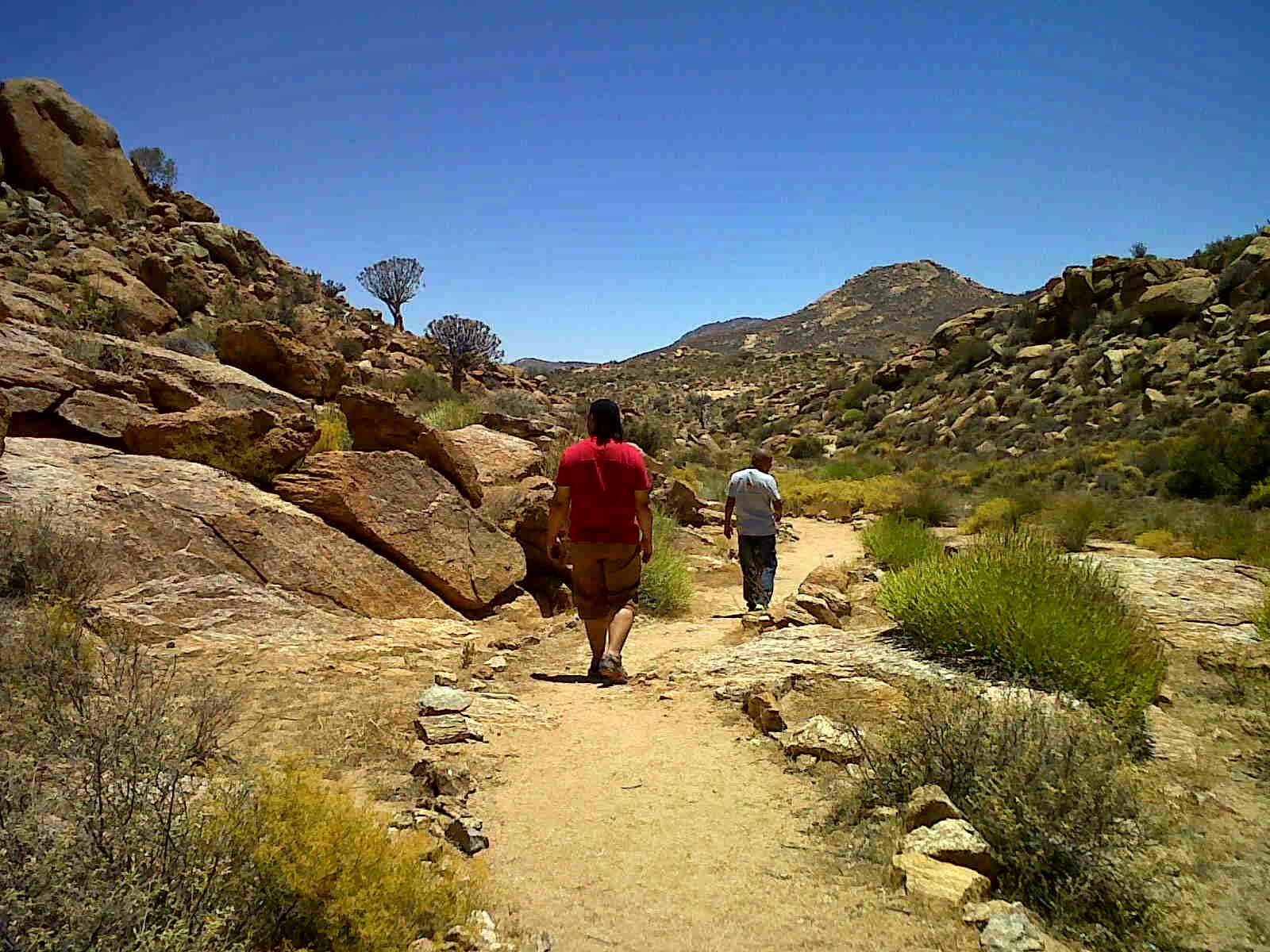
Kerfees in Namakwaland
Kerfees in Namakwaland is ‘n
wonderlike tyd en al het ons nie baie nie laat dit ons nie afsit om ‘n heerlike
tyd te he nie. Die musiek, die mense, die braai vleis en die kinders wat lag is
van die beste herinneringe wat ek koester. Soos ‘n mens ouer word verloor jy
dinge in die lewe, eers is dit die mense om jou, later is dit jou drome een vir een en eendag as
jy jouk om kry is dit Kersfees. Dit is ‘n moeilike werklikheid wat ons as mens
moet aanvaar.
Ek skryf hierdie stuk met die
musiek van Allou April in die agtergrond terwyl ek omring is met geboue en die
gejaag na wind. Soos die Prediker gese het, is al ons drome en suksesse aan die
einde van jou leeftyd ‘n gejaag na wind. Alles waar voor jy so hard gewerk het
kom tot niks. Niks.
So, terwyl ek besig is met my
gejaag na wind verlang ek na die mense van Namakwaland – my oorlede Ouma en Oupa,
my oorlede vriend Neels (Oor wie ek nie gehuil kan kry nie. Die huil sit hier
binne in my maar dit is moeilik om uit te kom. As dit net wil uitkom sal ek
beter voel maar nou wil dit nie.), my vriende wat oor die jare my famlie geword
het en my familie.
Die beste en die laaste keer wat
ons as familie bymekaar gewees het ‘n Kersfees was in 2005. Die jaar wat by die
army klaar gemaak het. Dit het spontaan gebeur. Eers het my een Antie laat weet
sy kom en toe my een oom (die ander een was by die huis) en op Kersfees het my ander
Antie kom kuier. Al hoewel twee van my Ouma en Oupa se kinders nie daar was nie
het dit nie saak gemaak nie.
Ek het lang arm musiek op my
laptop gehad wat ek op ‘n CD gesit het en wat ons in die DVD klaar gespeel het.
Ek het gedans – ons almal het gedans. Ek het die voorreg gehad om saam met my
Ouma te dans. Dit was toe sy nog sterk was want die jare daarna het sy al
agteruit gegaan tot sy ‘n skaduwee van haarself was. Ons het gemmerbier gedrink
en koek geeet. Vleis geeet.
Wat ‘n tyd.
Vandag dink ek daaraan en verlang
na my wereld en sy mense. Waar vandaan ek kom is nou wel droog en kaal in die
sommer maar die mense is gasvry en te gemoedkommend; wat ‘n eindproduk van
swaarkry is. Is net wanneer jy regtig swaar gekry het of rerig swaarkry dat jy
so gasvry en mededeelsaam kan wees sonder voorgee. Mense kan nou maar wat se
van ons wereld en sy mense maar nie een kan se ons is suinig en vrekkig nie.
Ons almal weet hoe om suiker tot more te vra.
Ons mense het ook hulle eie
soorte trots, ‘n trots wat jy nie uit hulle sal kry nie. En dit verskil van
hoogmoed. ‘n Trots wat hulle ook partykeer in stilte sal laat vergaan net sodat
jy nie hulle menslikheid van hulle kan neem nie. Daardie trots is wat hulle nog
mens hou al kry hulle hoe swaar. En dit is die trots wat in my en enige ander
kind van die Namakwaland is. Jy kan probeer om oor ons te loop en jy kan dit
miskien regkry maar my menslikheid sal agterbly al beteken dit my eie
ondergaan. Kruip is vir enige mens swaar maar nog swaarder vir iemand van
Namakwaland.
Maar genoeg van die trots en die
swaarkry en terug na Kersfees in Namakwaland.
Een van die dinge wat my altyd
nostalgies maak is die reuk van vuur in die skemer en die langarm musiek wat so
eie aan ons mense is. Die tipe musiek wat dit ontmoontlik vir jou maak om stil te
sit. Of jy nou kan dans of nie maar dans sal jy – al is dit net voutjies klop. Gee
vir Pieter Pillie en Oorlede Ant Grietjie ‘n kitaar en jy het ‘n party wat die
son sal laat op kom.
En terwyl Allou se Madiba’s Jive
my terug bring na die werklikheid toe, laat die herinneringe van Kersfees in
Namakwaland my met ‘n snaakse tevredenheid.
Geseende Kersfees.
 |
| Add caption |
Toe gewy aan my vriend Cornelius
Ovies, vriende en familie.
Monday, 8 December 2014
Enhancing Humanities in Africa
It seems as Humanities
across the globe is in a crisis. Several reports contribute this crisis to a
decrease in funding, a declining number of students who enrol for Humanities
and a declining number of graduates who find a job after they graduated in
Humanities (Delany, 2013; Levitz & Belkin, 2013 and Tworek, 2013).
A recent study by the
Academy of Science of South Africa echoes some of the global trends. One of the
key findings, in their report titled Consensus
Study on the Future of the Humanities in South Africa, indicates that
humanities is a state of intellectual stagnation and has been in this moribund
condition for the past 15 years. A report commissioned by the Department of
Higher Education called the Charter for Humanities and Social Sciences had
similar findings. The difference between the two was that the Charter was
institutionalised as the National Institute for Humanities and Social Sciences
and has to address the challenges Humanities in South Africa are facing. Even
though these reports are only based on the state of Humanities in South Africa
we may infer that this is most likely the case in the rest of Africa.
However, the reality is
Humanities in Africa inherited a particular history of privilege and subjection
at independence and since then we have been grappling with it, and it seems as
we are stuck. These reports opened a debate in South Africa and other parts of
Africa as to what is the way forward for Humanities in Africa.
Pillay (05 April 2013, Mail
& Guardian) argues that “we should lead the critique of the humanities and
social sciences we have inherited by pointing to its limitation.” Leading the
critique would mean we are taking responsibility for a ‘new’ Humanities going
forward. In addition to this, Premesh Lalu in an article in the Mail &
Guardian encourages African scholars to think ahead and out of the deadlock
(Lalu, 07 June 2014, Mail and Guardian). I have to agree as I found that the
majority of scholarly work in Africa is stuck in the past and disregard the
present and the future. There are two things we have to bear in mind in this
debate: we cannot change the past and we live in the present. I am not
disputing the importance of the past but we have the tendency of disregarding
the present and the future in scholarly work.
Like many other
disciplines, Humanities also operates in the present. Our reality is that the
present is materialistic and technologically driven society. Technological
advances shapes a future which is changing so rapidly that even the most
progressive technologically driven disciplines find it hard to keep up. This
can be either a threat or an opportunity. If we see it as an opportunity a new
generation of Humanities students has to be innovative, contemporary and at the
fore front of societal change. Thus, we must anticipate changes and approach it
progressively. However, this can only be possible if we are clear of the future
we want for Humanities in Africa.
So what is our point of
departure?
Mahmood Mamdani of the
Makerere Institute for Social Research (MISR) recently asked the question how
do we think the world from Africa? In the famous Hollywood movie ‘Blood
Diamond’ the mentor of the protagonist said to him TIA which means ‘this is
Africa.’ He referred to the main stream Western view of Africa which is seen as
violent, corrupt and exotic. Since then a new movement amongst young African
musicians developed which is called TINA which stands for ‘this is new Africa’.
This movement decided to reclaim African music and expose it to world. They are
not standing back for any of their Western counterparts and have some of the
most popular videos on Youtube. It is time for Humanities in Africa to reclaim
their place in world but we can only do this if we know what our point of
departure is and only then we are able to think the world from Africa.
Sunday, 30 November 2014
Race and the ‘politics of beauty’ – A male’s view
I recently paged through the latest edition of Men’s Health
SA and it struck me how the majority of cover models tend to be white.
I decided to count all the black men in the December 2014
edition and I found 27 different black men of which 17 are models; the other
ten appear in DSTV and Telkom adverts. I then counted all the white models and
I found 47 white men. This total would have been more if I included the DSTV and
Telkom adverts.
More disturbing was the under representation of black women
in this edition. I counted 3 black women compared to the 24 white women. More
interesting was how these women were portrayed. Firstly, the 3 black women
shared the spotlight other white women. Secondly, white women were portrayed as
sexually desirable which ranged from the girl next door to models who
suggestive press against men in jeans and libido enhancing adverts.
I did not stop there, I also looked at the cartoons in the
Magazine and I found that it is evidently racialized and there is a clear
underrepresentation of black people.
So what does this say?
Firstly, this edition of Men’s Health is targeting white men
and this is evident from the underrepresentation of black people.
Secondly, the underrepresentation of black people in Men’s
Health says something about how Men’s Health sees and portrays beauty in the
cosmetic industry. This is obvious by how they portrayed intimate relationships
(relationships between men and women). Their portrayal reinforces the apartheid
objective[1]
which was that white people must date and marry white people and black people
must date and marry black people. Through this they do not encourage
interracial relationships. The evidence is their lack of portraying black women
as sexually attractive beings. They clearly work from the assumption that white
men would not be interested in black women. Thus, they do not encourage
interracial relationships.
I see this as a ‘politics of beauty.’ For me the ‘politics
of beauty’ is where the dominant social force reinforces or enforces their
notion of beauty through popular media such the television, radio, print media
and social media.
Fanon speak about this phenomenon in length in Black Skin, White Masks and it worth
mention here briefly. Black women in particular are guilty for reinforcing the mainstream
portrayal of beauty. Fanon speaks about the whitening process black women
undergo to become desirable for white men and to match the standards of what white
women consider as beauty. Fanon point out how black women will go through
extreme measures such as skin bleaching and hair straightening to become more
like white women.
This is still the case today. In South Africa there is currently
a ‘yellow bone’ trend going on amongst ‘black’ women[2].
If you are considered to be a ‘yellow bone’ you automatically moved up the
beauty hierarchy in the ‘black’ society. The same trend is visible amongst ‘coloured’
women. The lighter you are in complexion the further you move up the beauty
ladder in the ‘coloured’ society. Some ‘coloured’ women do not even want to be
in the sun for 10 min because they do want to ‘become black.’ Another trend is
weaves and hair straightening products amongst ‘black’ and ‘coloured’ women.
However, we black men are not saints because we let our
inferiority complex cloud our notions of beauty. This is evident by the gender
of the male in interracial relationships. My observation is that in the
majority of black and white interracial relationships the male is white and the
female is black. The minority of cases are the other way around.
Once again let’s use Fanon’s Black Skin, White Masks to make sense of this. Fanon argued that
for the black man to see himself of worthy dating a white woman he will first
try and overcome his material limitations so that it equals that of his male
white counterpart. Only once this is achieved he will develop a sense of
self-worth to approach a white woman. The reality however, especially in a
society like ours it is hard for a black man to equal the resources of their
white male counterparts. Thus, white women stay goddesses which mere mortal
beings such as black men can only dream of and since they dream of white women
they encourage black women to become white so that their fantasies become a
reality even if it is only in their dreams.
I cannot but conclude that in this particular case Men’s
Health’s portrayal of beauty is racialized and reinforces the racist notion
that white people are more beautiful than black people. Their aim,
intentionally or unintentionally, is to maintain the status quo in a society that was torn apart by racism. However,
this notion is also reinforced by black people’s inferiority complex towards
white people.
This left me with something to ponder: can you consider this
kind of politics as racism especially since it has the same end in mind as the
racist project which started in the previous century.
Subscribe to:
Posts (Atom)